
WELCOME BONUS 300%
UP TO €2000 + 100
FREE SPINS
UP TO €2000 + 100
FREE SPINS
Home → Blackjack
Blackjack at Starz 888: Variants, Rules and Payouts
What doesn't count as Blackjack after Split?
The Blackjack Split rule allows players to divide a starting pair into two independent hands, with the game permitting up to four total hands in a single round. This specific limit means that attempting to split a third time when already holding two separate pairs results in an automatic hold of the additional cards rather than a new wager. Consequently, the player must manage their bankroll across these multiple active bets without expecting further expansion of the hand count beyond the established cap.
The Blackjack Insurance side bet operates separately from the main hand logic and remains unaffected by splitting actions, yet it carries a steep 7.47% house edge for non-counters. Since the base RTP for this specific insurance wager sits at 92.53%, accepting it significantly drags down the overall theoretical return compared to the standard table game metrics. Players ignoring this high-cost option preserve their expected value better than those who accept the dealer's ace offer regardless of the deck composition.
Resplitting Aces provides a modest 0.08 percentage point improvement to the RTP, but this benefit is strictly limited to receiving only one additional card per split Ace. This restriction prevents the exponential multiplication of hands that occurs with other pairs, thereby capping the potential upside of this specific liberal rule modification during gameplay. The limitation ensures that the casino maintains a manageable risk profile while still offering a slightly more favorable condition for skilled participants who utilize this feature.
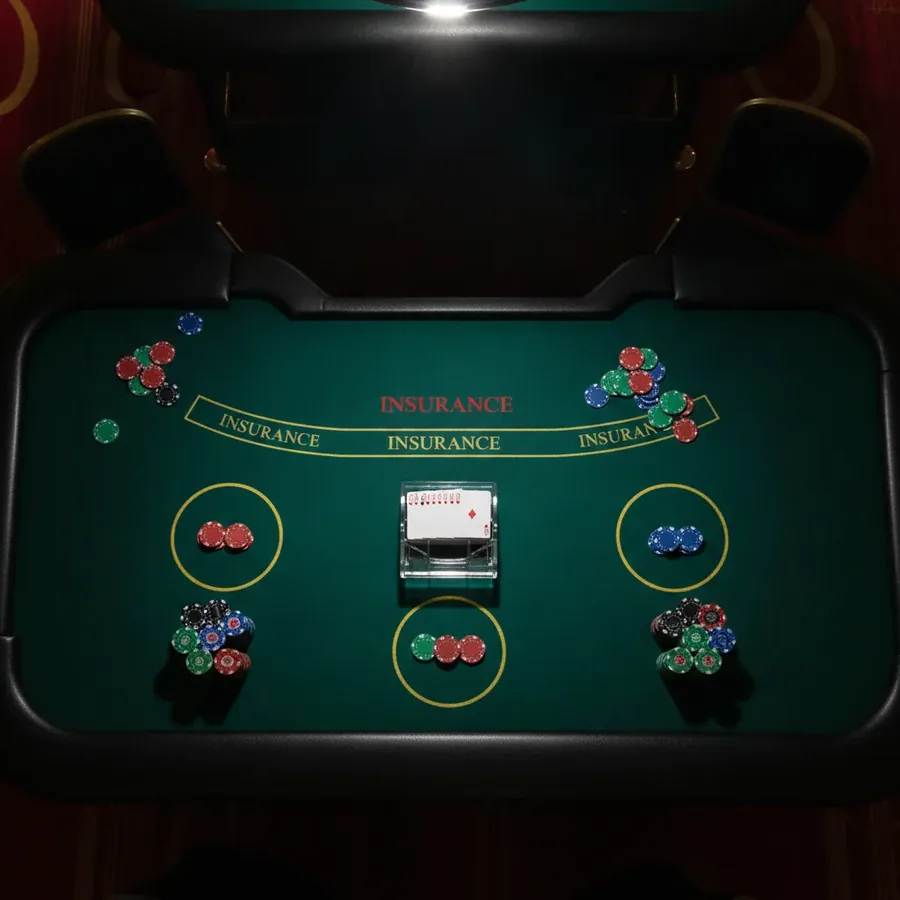
Check table limit before the first bet
The Quantum Blackjack Plus Live table hosted by Playtech accepts wagers ranging from 1 EUR to 5,000 EUR, accommodating both casual testers and high-rolling professionals. This wide betting range allows players to adjust their stake size dynamically based on their current bankroll status without being forced into uncomfortable minimum or maximum constraints. Understanding these boundaries prevents accidental over-betting or under-betting scenarios that could disrupt the intended pacing and financial strategy of the gaming session.
Lightning Blackjack by Evolution imposes a narrower window of 1 EUR to 2,500 EUR per hand, which may restrict larger stakes compared to the Playtech alternative mentioned previously. The presence of lightning multipliers up to 25x on winning hands adds volatility to the returns, requiring players to factor in the variance alongside the stated 99.56% RTP. Adjusting bet sizes within this specific limit helps manage the impact of these random multiplier events on the overall session outcome and long-term expectations.
Blackjack Party offered by Evolution features a distinct limit structure spanning 1.00 EUR to 1,000 EUR, catering primarily to mid-range players seeking a social atmosphere. The dual moderator setup creates a unique environment that differs from standard live dealer games, influencing the pace of play and the frequency of interactions during the session. Recognizing this lower maximum cap ensures that players with substantial funds do not exceed the table's capacity, avoiding potential rejection of their intended high-value wagers.
16 vs 10 played incorrectly: most common error
The Blackjack Surrender rule offers a late surrender option that improves the RTP by approximately 0.08 percentage points by allowing players to forfeit half their bet after checking for dealer blackjack. This mechanism is particularly valuable when holding a hard sixteen against a dealer ten, as it mitigates the significant loss probability associated with hitting or standing in this unfavorable position. Utilizing this rule correctly reduces the overall house edge compared to tables that completely exclude surrender options from their standard rule sets.
Early surrender, which permits forfeiting before the dealer checks for an ace, is much rarer but offers a superior improvement of up to 0.6 percentage points to the player's advantage. Although extremely difficult to find in modern online casinos, its absence forces players to rely solely on basic strategy decisions that carry higher inherent risks for marginal hands. The contrast between early and late surrender highlights the critical importance of rule variations in determining the true cost of playing specific blackjack variants.
Standard basic strategy dictates hitting on sixteen against a ten unless surrender is available, but deviations based on card counting can alter this recommendation depending on the true count. Without access to advanced tracking methods, relying on the fixed probabilities of the deal becomes essential for maintaining optimal decision-making throughout the shoe. The mathematical expectation shifts dramatically based on whether the player adheres strictly to the chart or attempts intuitive plays that ignore the statistical reality of the remaining deck.
Clicked Too Late: Hand Is Automatically Held
The Liberal Vegas Strip variant boasts a highly favorable RTP of 99.72% due to a combination of rules including soft seventeen stands and double after splits. This configuration yields a minimal house edge of just 0.28%, making it one of the most statistically advantageous versions available to online players today. The low standard deviation of 1.15 indicates that bankroll fluctuations are relatively contained compared to high-variance games, providing a smoother experience for consistent players.
Comparing this to the standard six-deck game with a 99.54% RTP reveals a clear preference for the liberal version when all other conditions remain equal. The additional 0.18 percentage point advantage accumulates significantly over thousands of hands, translating to tangible savings for regular visitors who prioritize mathematical efficiency in their game selection. Choosing the correct variant directly impacts the long-term profitability of the gaming session by minimizing the inevitable house advantage.
Insurance bets on these tables pay 2:1 but carry a massive 7.47% house edge, making them universally discouraged except for professional card counters with a true count of three or higher. Accepting insurance without a positive count erodes the excellent RTP achieved through the primary game rules, effectively negating the benefits of the favorable base conditions. Maintaining discipline regarding side bets preserves the integrity of the strategic approach required to maximize returns in these optimized environments.
Table games contribute only 10% toward the 300% welcome bonus turnover requirement, meaning players must wager ten times more on these titles compared to slots to clear the promotion. This restriction makes the high-RTP nature of blackjack less impactful for bonus hunters who need to meet wagering thresholds quickly through faster-playing games. Understanding this contribution rate is crucial for managing expectations regarding bonus conversion and effective bankroll utilization during promotional periods.
Blackjack Payout 3:2 Explained in Detail
A standard 3:2 payout on a natural blackjack returns 150 EUR on a 100 EUR bet, preserving the mathematical foundation of the game's favorable odds. This ratio is integral to achieving the low house edges seen in variants like the single-deck game, which offers a remarkable 99.85% RTP and only a 0.15% advantage for the casino. Deviating from this standard payout structure fundamentally alters the risk-reward balance, often resulting in significantly worse outcomes for the participant over time.
Switching to a 6:5 payout structure increases the house edge by exactly 1.39 percentage points, a penalty greater than any other single rule change in the game. On a 100 EUR bet, the player receives only 120 EUR instead of 150 EUR, effectively reducing the win value by 30 EUR per successful natural hand. This alteration drastically diminishes the appeal of the game, pushing the RTP down to 98.15% and making it substantially less profitable than its 3:2 counterparts.
The difference between 3:2 and 6:5 payouts becomes even more pronounced when considering the frequency of blackjacks, which occur roughly once every twenty-one hands in a fresh shoe. Over a series of one hundred blackjacks, the cumulative loss from the inferior 6:5 rate amounts to 3,000 EUR compared to the standard rate, representing a severe drain on capital. Selecting tables with the correct payout ratio is therefore a critical step in protecting one's bankroll from unnecessary statistical erosion.
Blackjack variants at a glance
| Variant | Payout | House edge | Rule | Bet range |
|---|---|---|---|---|
| Blackjack Split / Double / H17 – Regel-Effekte | n.a. (Regel-Modifikatoren) | H17 +0.22 Prozentpunkte; RSA −0.08 Prozentpunkte; DAS −0.14 Prozentpunkte | Dealer Hits Soft 17 verschlechtert RTP um 0.22 Prozentpunkte; Resplit Aces verbessert um 0.08 Prozentpunkte; Double After Split verbessert um ca. 0.14 Prozentpunkte; 6 Decks statt 8 – ca. 0.02 Prozentpunkte. | Double – Einsatz ×2 mit einer Karte; Split – bis 4 Hände; Ass-Split meist mit einer Karte. |
| Blackjack 6 Decks, S17, DAS, DOA, Auszahlung 3:2, Basisstrategie | 99.54% | 0.46% | Dealer steht auf Soft 17; Verdopplung auf jeder Zweierkarte; Verdopplung nach Split erlaubt; keine Aufgabe. Basisstrategie ist für diesen Wert zwingend | Blackjack 3:2, normaler Gewinn 1:1, Insurance 2:1 |
| Blackjack Insurance / Versicherung (6–8 Decks) | 92.53% | 7.47% | Separate Nebenwette bis 50% der Hauptwette, wenn der Dealer ein Ass hat. Basisstrategie schreibt IMMER Ablehnung vor (außer Karten zählen bei True Count ≥ +3). Bei einem Deck Vorteil ≈ 5.88% | Insurance 2:1 |
| Blackjack Auszahlung 6:5 statt 3:2 (6 Decks) | 98.15% | 1.85% | Ersatz von 3:2 durch 6:5 fügt exakt +1.39 Prozentpunkte zum Vorteil des Casinos hinzu – stärker als jede andere Regeländerung. Bei $10 Einsatz zahlt Blackjack $12 statt $15. | Blackjack 6:5, Gewinn 1:1 |
| Blackjack Liberal Vegas Strip (liberale Regeln, 3:2) | 99.72% | 0.28% | Günstigste Regelkombination: S17 + DAS + Resplit + Late Surrender. Standardabweichung 1,15 | Blackjack 3:2, Gewinn 1:1 |
| Blackjack Ein Deck, klassische Regeln, 3:2 | 99.85% | 0.15% | Weniger Decks = niedrigerer Vorteil; ein Deck gibt ca. −0.48 Prozentpunkte gegenüber 8 Decks. Oft durch 6:5 Auszahlung kompensiert. | Blackjack 3:2, Gewinn 1:1 |
Splitting Eights vs Standing on 16
The house edge for standard Blackjack with six decks and S17 rules sits at 0.46 percent when players follow the strict basic strategy. This baseline figure assumes optimal decisions, including splitting eightes against a dealer ten rather than standing on sixteen to avoid compounding losses. Deviating from this mathematical optimum significantly increases the casino's long-term advantage over the player. Splitting creates two independent hands that can potentially recover value lost by holding a weak total.
Choosing to stand on a hard sixteen instead of splitting eights against a dealer ten increases the expected loss per hand considerably. Basic strategy dictates that splitting reduces the volatility and improves the overall return compared to risking a single weak hand. The difference in outcome stems from the probability of drawing cards that push the sixteen into a losing position versus creating two stronger starting points. Ignoring this rule wastes potential winnings that the mathematical model guarantees under correct play.
The Quantum Blackjack Plus Live table by Playtech offers multipliers up to 1000x which might tempt players to ignore fundamental rules. However, even with these high-volatility features, the underlying RTP remains 99.57 percent only if optimal strategy is maintained throughout every round. Players who split eights correctly benefit from the structural advantage while those who stand lose value regardless of bonus triggers. The live dealer environment does not change the mathematical expectation derived from the deck composition and payout tables.
Ignored Basic Strategy Chart: 1 Percent Wasted
Ignoring the basic strategy chart typically adds approximately one percent to the house edge, turning a favorable game into an unfavorable one. For instance, playing with six decks and surrender options usually yields a 0.46 percent house edge, but deviations can raise this figure drastically. Each incorrect decision, such as hitting on a twelve against a dealer four, accumulates small losses that erode the bankroll over time. Adherence to the chart is the only way to preserve the theoretical return rate promised by the game rules.
The difference between a 99.54 percent RTP and a lower return often hinges on whether players split pairs or double down correctly. A single mistake like refusing to double a hard nine against a dealer six can cost more than ten hands of correct play. The cumulative effect of these errors transforms a low-volatility session into a high-cost entertainment expense for the average visitor. Maintaining discipline prevents the house from reclaiming the statistical advantage built into the game mechanics.
Lightning Blackjack by Evolution features lightning multipliers up to 25x, yet these side effects do not alter the core strategic requirements. The base game still demands strict adherence to basic strategy to achieve its stated 99.56 percent RTP despite the added excitement. Players who chase multipliers by making non-optimal moves sacrifice long-term profitability for short-term speculative gains. The mathematical foundation remains unchanged regardless of the visual enhancements provided by the live studio production.
The variance introduced by ignoring strategy charts can be quantified by comparing the expected loss rates of optimal versus suboptimal play. Optimal play minimizes the house edge to its lowest possible level, whereas random decision-making exposes the player to maximum risk. Every hand played without reference to the chart represents a deviation from the path of least financial resistance. Consistency in applying the rules ensures that the player retains the maximum possible share of the wagered amount.
What doesn't count towards turnover at 10 percent?
Blackjack games contribute only 10 percent to the wagering requirement for the welcome bonus, which includes both standard and live dealer variants. This low contribution rate means that every 100 euros wagered on these tables counts as just 10 euros toward the turnover target. Players must therefore bet ten times more on blackjack than they would on slots to clear the same portion of the bonus conditions. This restriction applies uniformly across all blackjack offerings available on the platform.
The 300 percent welcome bonus up to 2,000 euros plus 100 free spins requires significant volume to convert due to the table game limits. Since slots contribute 100 percent, relying solely on blackjack would necessitate wagering amounts that exceed practical bankroll limits for most users. The disparity in contribution percentages incentivizes players to allocate their bonus funds primarily to slot machines where progress is accelerated. Understanding this ratio is crucial for planning an effective withdrawal strategy.
Live tables such as Quantum Blackjack Plus and Lightning Blackjack fall under the same 10 percent contribution category as their RNG counterparts. Even though these games offer higher stakes ranging from 1 euro to 5,000 euros, the slow progress toward turnover remains a bottleneck. A player betting 1,000 euros per hour on live blackjack only clears 100 euros of the required turnover within that timeframe. This limitation effectively discourages heavy usage of table games for bonus clearance purposes.
The distinction between game types highlights the casino's preference for slot revenue during the bonus period. While blackjack offers better odds, its negligible impact on wagering requirements makes it an inefficient tool for unlocking withdrawn funds. Players seeking to maximize the utility of their bonus should prioritize high-contribution games to meet the terms efficiently. Failing to account for this 10 percent factor can lead to unexpected difficulties when attempting to cash out winnings.
How much time is left for the decision?
Live dealer blackjack games impose strict time limits for player actions, typically allowing between 15 to 30 seconds per decision phase. In Quantum Blackjack Plus by Playtech, the rapid pace combined with quantum multipliers requires quick thinking to secure potential payouts. Missing the window results in an automatic fold or default action depending on the specific table rules and software configuration. Speed becomes a critical skill alongside strategic knowledge to maintain an efficient gaming session.
Standard blackjack tables at Starz 888 generally provide slightly more generous timing windows compared to the high-speed live variants. However, even here, delays beyond the allotted period trigger automated moves that may not align with the player's intended strategy. The dealer cannot wait indefinitely for a response, ensuring the flow of the game remains uninterrupted for all participants. Managing time effectively prevents unnecessary losses caused by hesitation or technical latency.
The presence of multiple moderators in Blackjack Party by Evolution adds a social element but does not extend the decision timer. Players must still act within the standard constraints set by the game engine to avoid penalty outcomes. The interactive nature of the stream encourages engagement but requires disciplined adherence to the temporal boundaries enforced by the system. Balancing social interaction with timely decisions ensures a smooth and compliant gaming experience.
Time management becomes particularly challenging when dealing with complex strategies like splitting pairs or doubling down under pressure. Each additional option requires careful consideration, reducing the available time for finalizing the move before the clock expires. Players accustomed to slower-paced environments may struggle to adapt to the rigid schedules imposed by live streaming technology. Mastery of both strategy and speed is essential for sustained success at these virtual tables.
Blackjack Contributes Only 10 Percent to Wagering
The 10 percent contribution rule for blackjack creates a significant hurdle for players aiming to convert the 300 percent welcome bonus. With a maximum bonus value of 2,000 euros, clearing the associated wagering requirements through table games alone demands enormous volume. For example, meeting a 40x rollover on the bonus amount would require 80,000 euros in blackjack bets to equal 8,000 euros of credited turnover. This mathematical reality forces most users to seek alternative paths for bonus fulfillment.
Comparing this to slots which contribute 100 percent reveals the stark contrast in efficiency for bonus conversion strategies. Betting 1,000 euros on slots advances the turnover goal by the full amount, whereas the same stake on blackjack advances it by merely 100 euros. The disparity incentivizes players to mix their gameplay or focus entirely on slots if the primary objective is rapid bonus release. Ignoring this metric leads to prolonged playtimes and increased exposure to the house edge.
Live blackjack variants like Lightning Blackjack offer entertainment value but do not alleviate the burden imposed by the low contribution percentage. Despite featuring multipliers up to 25x, the fundamental wagering calculation remains unchanged, penalizing high-stakes table players disproportionately. The combination of poor contribution rates and inherent house edges makes blackjack a costly method for clearing bonus conditions. Strategic allocation of funds towards higher-contribution games is necessary to optimize bonus utility.
The restriction applies equally to all blackjack formats, including those with liberal rules like the Liberal Vegas Strip variant mentioned in comparisons. Regardless of the superior RTP or favorable rule sets, the bonus terms override any perceived advantages in game quality. Players must accept that the mathematical benefits of better blackjack rules are nullified by the administrative constraints of the promotion. Recognizing this limitation allows for more realistic expectations regarding bonus redemption timelines.
Bonus Lost Due to 10 Percent Contribution
The table game contribution rate sits at a strict 10 percent, which drastically reduces the utility of blackjack sessions for bonus clearance. When players engage with Quantum Blackjack Plus Live or Lightning Blackjack, only one tenth of every wagered euro counts toward the required turnover. This low percentage means that a 100 euro bet generates merely 10 euros of progress against the wagering requirement, forcing players to wager significantly more than on slots.
In contrast, slot games contribute 100 percent to the bonus terms, making them the most efficient path for clearing the 300% welcome bonus up to 2,000 euros plus 100 free spins. A player who deposits 500 euros receives a 1,500 euro bonus, requiring 60,000 euros in total turnover if played exclusively on slots. Switching to live dealer tables like Evolution's Blackjack Party slows this process tenfold, as each 1,000 euro bet only advances the goal by 100 euros.
The mathematical impact becomes visible when comparing the house edge of different blackjack variants against the contribution penalty. Playing Blackjack Liberal Vegas Strip with its 0.28% house edge and 99.72% RTP is already costly, but the 10% contribution multiplier effectively increases the real cost of play. Players must generate massive volume to clear the bonus, turning a theoretical advantage into a guaranteed loss due to the combined effect of rake and low contribution.
Early Surrender is removed from many tables
Late Surrender is available in Blackjack Liberal Vegas Strip, reducing the house edge by approximately 0.08 percentage points for those who use it optimally. This rule allows players to forfeit half their bet after the dealer checks for blackjack, providing a small safety net against strong dealer upcards. The absence of Early Surrender, which can reduce the house edge by up to 0.6 percentage points, is a significant disadvantage for strategic players seeking to minimize losses.
Most other tables, such as the standard six-deck game with S17 and DAS, do not offer any surrender option, forcing players to hold weak hands until resolution. Without Late Surrender, the house edge rises to 0.46%, compared to the lower 0.28% found in the liberal variant. This removal eliminates a crucial defensive tool, increasing the expected loss per hour for players who rely on basic strategy adjustments to protect their bankroll.
The financial consequence of missing Early Surrender is substantial, as it represents one of the most valuable rules for skilled players in single-deck games. While Blackjack Ein Deck offers a 0.15% house edge, it often compensates with less favorable payout structures or missing surrender options. On multi-deck games like Lightning Blackjack, the lack of any surrender feature means players must absorb variance without the ability to cut losses early, leading to higher long-term costs.
Side Bets Increase House Edge to 5 Percent
Insurance bets in six to eight deck games carry a house edge of 7.47%, with an RTP of only 92.53%, making them highly unfavorable for average players. This side bet pays 2:1 but requires the dealer to show an Ace, and basic strategy dictates always rejecting it unless counting cards with a true count of +3 or higher. For non-counters, accepting insurance turns a manageable 0.46% house edge into a costly liability, eroding potential profits over thousands of hands.
Quantum Blackjack Plus Live introduces quantum multipliers up to 1,000x on three-card combinations, which attract attention but likely increase the overall house edge through complex probability structures. While the base RTP remains high at 99.57% with optimal strategy, the side bet mechanics in games like Evolution's Lightning Blackjack, which offers 25x multipliers, shift value away from the player. These volatile features are designed to create excitement but statistically drain the bankroll faster than standard betting patterns.
The combination of poor side bet odds and main game edges creates a cumulative drag on player returns across all live dealer offerings. Even with favorable rules like Double After Split, which improves RTP by 0.14 percentage points, the temptation to place insurance or multiplier bets undermines long-term stability. Players chasing big wins with Insurance or quantum features face a harsh reality where the house retains a significant portion of action, far exceeding the nominal edge of the core game.
Continuous Shuffling Machine shuffles after each round
Continuous Shuffling Machines (CSMs) are used in many live and digital blackjack tables, ensuring that every hand is dealt from a freshly shuffled shoe. This technology eliminates card counting advantages by preventing players from tracking the ratio of high to low cards remaining in the deck. Consequently, the theoretical return drops because players cannot adjust their bets or strategies based on deck composition, locking them into static basic strategy plays regardless of the situation.
Games like Blackjack Party and standard live tables utilize shuffling protocols that reset the deck state after each round, maintaining a constant house edge of around 0.46% to 0.28%. Unlike traditional shoes where penetration might allow for slight edge shifts, CSMs ensure that the 0.22 percentage point penalty for H17 dealers hitting soft 17 remains fixed. This consistency protects the casino's margin but removes any opportunity for skilled players to exploit favorable deck compositions during deep penetration phases.
The use of CSMs also affects the variance and pace of the game, leading to more hands per hour and thus higher total action against the house edge. With no residual card memory, the statistical expectation remains strictly tied to the published RTP figures, such as 99.54% for six-deck S17 games. Players relying on timing or shuffle tracking will find these environments impenetrable, as the machine ensures complete randomness and neutralizes any historical data from previous rounds.
Place Side Bet before cards are dealt
Players must place their initial wagers, including any optional side bets like Insurance, before the dealer distributes the first two cards to themselves and the participant. This timing constraint prevents last-minute adjustments based on visible information, ensuring that all decisions are made under conditions of incomplete knowledge. For instance, accepting Insurance requires committing funds before knowing if the dealer holds a ten-value hole card, exposing the bettor to immediate risk.
In live dealer formats such as Quantum Blackjack Plus Live, the betting window closes strictly before the quantum multipliers are revealed on the player's cards. This sequence means that participants cannot react to the multiplier values when placing their primary bet, removing any reactive strategy that might otherwise mitigate losses. The fixed nature of the bet placement reinforces the house advantage, as players cannot tailor their exposure to the specific outcomes generated by the random number generator.
The inability to alter bets after the deal applies equally to split and double-down opportunities, which occur only after the initial hand evaluation. While splitting allows for up to four hands in some variants, the original wager structure dictates the maximum exposure before any additional actions are permitted. This rigid protocol ensures that the house edge, whether 0.28% in liberal games or higher in restrictive variants, is applied consistently without deviation from pre-deal commitments.
Contact
Live - online chat
Banking









Providers












888Starz 2026